Blog Post #8 - 9/4/2026
By Mentalist Rick Silver

What Entertainment Works Best for a Corporate Event?
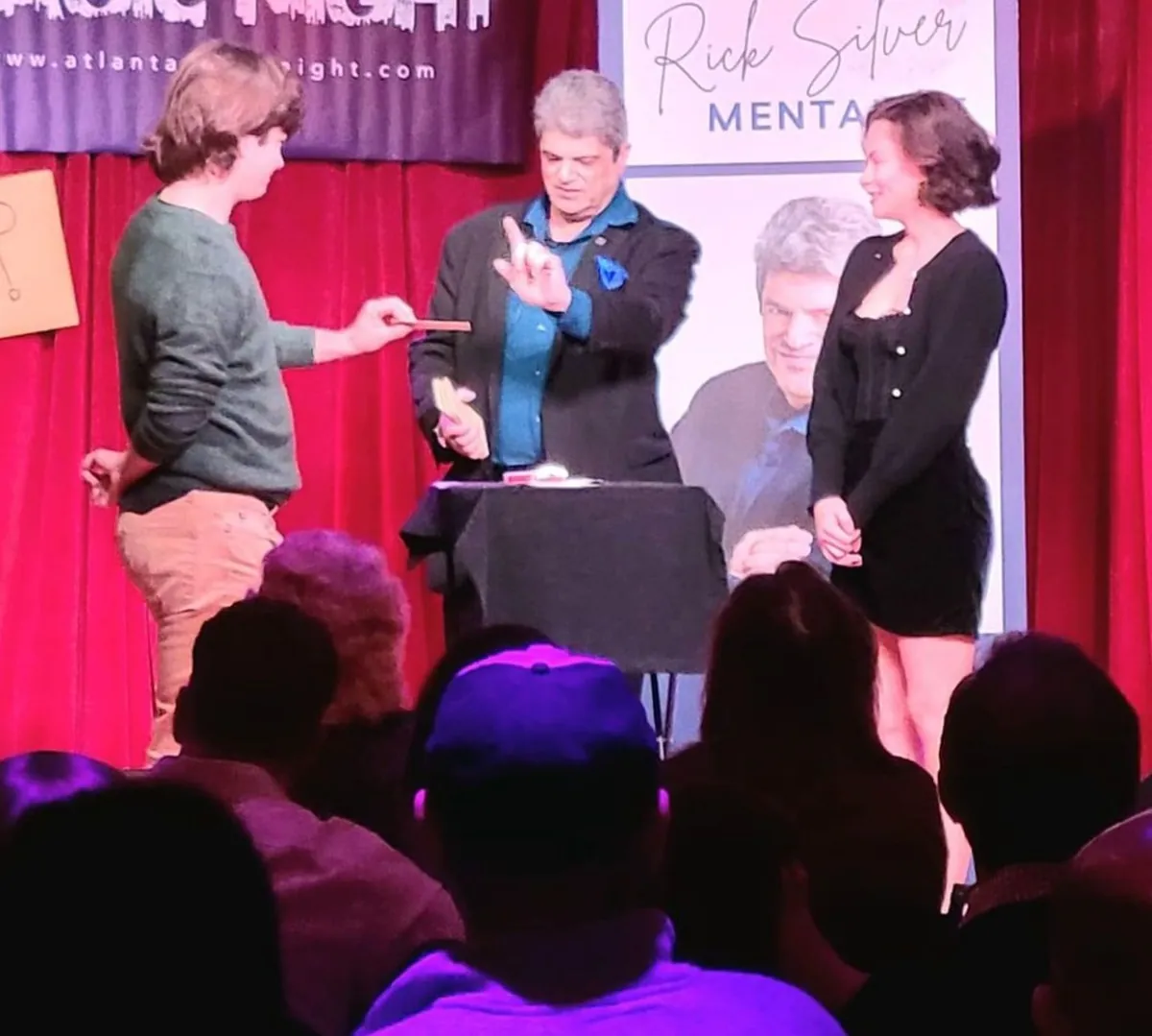
Mentalist Rick Silver performing on stage for a corporate audience
Somewhere on the run-of-show there is a line that just says “entertainment.” An hour, after dinner, before the closing remarks. Somebody has to fill it, and the options all sound reasonable when you say them out loud.

The honest answer is that there is no single best act for a corporate event. There is a best act for YOUR room, on that night, at that hour, with that goal — and those are different rooms.

I have been performing since 1994, and I have watched every one of these options work beautifully and watched most of them fall flat. The difference is almost never talent. It is fit.

So here is the comparison I wish more planners had in front of them before the deposit goes out.


The corporate entertainment matrix

Scroll the table sideways to see every column.

How six common options compare across the four things that decide whether entertainment lands in a corporate room.
Entertainment Best For Audience Interaction Networking Friendly Stage Impact Production Complexity
DJParties Low Medium Medium Low
BandCelebrations Low Medium High High
ComedianGeneral sessions Medium Low High Medium
MagicianSocial events High High Medium Low
MentalistCorporate audiences High High High Low
KeynoteLearning Medium Low High Medium


What the columns actually mean

  • Audience interaction — how much your guests are in it rather than watching it. High interaction is why people describe the night in first person afterward.
  • Networking friendly — whether the entertainment gives people something to talk to each other about, or requires them to stop talking entirely.
  • Stage impact — whether it can hold a full room from the front, with everyone facing the same direction at the same time.
  • Production complexity — what it costs you in load-in, sound, lighting, floor space, and the hours of the day you lose to it.
That last column is the one planners discover last and regret first. An act that needs a stage build, a sound check and a two-hour load-in has quietly redesigned your whole day.


Start with the room, not the act

Before comparing performers, answer four questions about the evening. They eliminate most of the list on their own.


What is this event for? A holiday party, an awards dinner, a sales kickoff and a client appreciation evening are four different jobs. The first wants release, the second wants ceremony, the third wants energy pointed at a goal, and the fourth wants your guests to feel known.


Do people need to talk to each other? If the real purpose is relationships — clients meeting your team, departments mixing, a new office getting acquainted — then anything that demands an hour of silence is working against you.


Where does it sit in the night? The same act that is perfect at 8:00 is the wrong call at 6:15, while people are still arriving with a drink in one hand.


Where each option genuinely wins

A DJ is the right answer when you want dancing. Nothing else on this list replaces one for that. A DJ is also the most flexible option in the room — volume down for arrival, up after dessert — and the production ask is small. What a DJ will not do is hand the room a shared moment to talk about afterward. That is not a flaw. It is the job description.


A band gives you the biggest stage picture of anything here, and for a milestone — an anniversary year, a major launch, a retirement — that scale is the point. The trade is production. Backline, sound check, power, floor space and a load-in window that eats a chunk of your day. Book a band when the celebration deserves the footprint.


A comedian can own a general session like nothing else, and a great set becomes the story of the year. The risk is that comedy is the least forgiving format in a corporate room. It needs seated, attentive people with clear sightlines, and the material has to survive an audience holding the CEO, the newest hire and every department that does not quite get along. When it fits, it is superb. When the room is wrong, there is no recovery.


A keynote is the right call when the evening owes people something to take back to their desk. It is content rather than entertainment, although a great keynote will have both so the information is retained better.


A magician is built for the social half of an event. Strolling from group to group during a cocktail hour turns a room of strangers into a room of small conversations, which is exactly what that hour is for. The ceiling is stage impact — close-up work is astonishing from three feet away and hard to scale to two hundred people at once.


Where mentalism fits

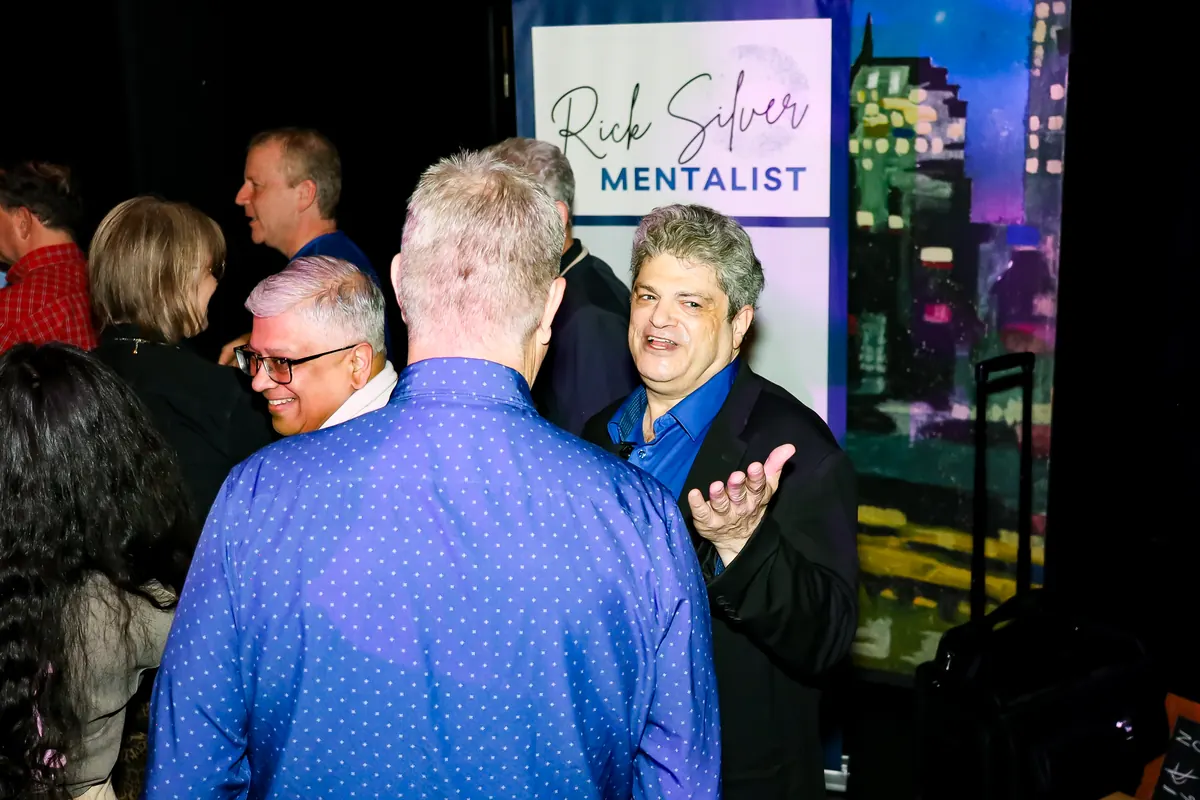
Rick Silver performing mentalism for a small group during a corporate cocktail hour


I am not a neutral party here, so weigh this accordingly — but the reason mentalism reads high in three columns at once is structural rather than promotional.


It is high on interaction because the show does not work without your guests in it. The thoughts being revealed belong to people in the room, not to me, and everyone watching knows those people.


It is networking friendly for the same reason. When a colleague’s thought ends up said out loud, the room has something to discuss that is genuinely about them. That conversation keeps going at the table long after I have moved on.


And it holds a stage, because the reactions are the show. A person’s face when something impossible happens to them is visible from the back of a ballroom in a way that close-up work is not.


The practical side is the unglamorous part, and it is why the last column reads Low. It needs about six feet by six feet of clear floor, sets up in under five minutes, and asks for no stage build, no risers, no load-in crew and no technical rider. It works for eight guests and it works for two hundred. There are no stooges and no secret helpers. Nobody gets embarrassed, and it stays clean throughout — which matters when the room holds your CEO and your newest hire at the same table. To be totally honest, I cannot speak about the acts of other mentalists, but this description is accurate for my act.


Two formats, not one decision

The most common mistake I see is treating this as a single choice. Most evenings have two entertainment problems, and they want different answers.


The SOCIAL WINDOW— arrival, cocktails, dinner — wants something that moves through the room and leaves conversation behind it.


The SPOTLIGHT MOMENT — after dessert, before the closing remarks — wants something that pulls two hundred people in the same direction at once.


Strolling through the cocktail hour followed by a stage set after dinner covers both, and the second half lands harder because the room already met you during the first.


Outside the office

Everything above applies just as squarely to private events. Milestone birthdays, anniversaries, graduations and holiday parties face the same four questions — what is it for, do people need to talk, what does the room look like, and where does it sit in the night.


Strolling mentalism through a wedding reception or a cocktail hour is built for exactly those small shared moments, table by table, while the room is still finding itself.


The short version

If you want dancing, hire a DJ. If the milestone deserves scale and you have the load-in window, hire a band. If you have a seated general session with clean sightlines, a comedian is hard to beat. If people need to leave with something usable, book the keynote.


If what you actually need is a room full of people who talk to each other, react out loud, and go home with a story about their own colleague — that is the column where mentalism sits, and it asks very little of your production schedule to get there.


Tell me what your evening is for, how the room is set and where the entertainment sits in the night, and I will tell you honestly which of these six I think it should be — including when the answer is not me. Get in touch and tell me about your event.