Blog Post #7 - 8/30/2026
By Mentalist Rick Silver
By Mentalist Rick Silver
What Are the Best Ways to Make a Corporate Event Memorable?
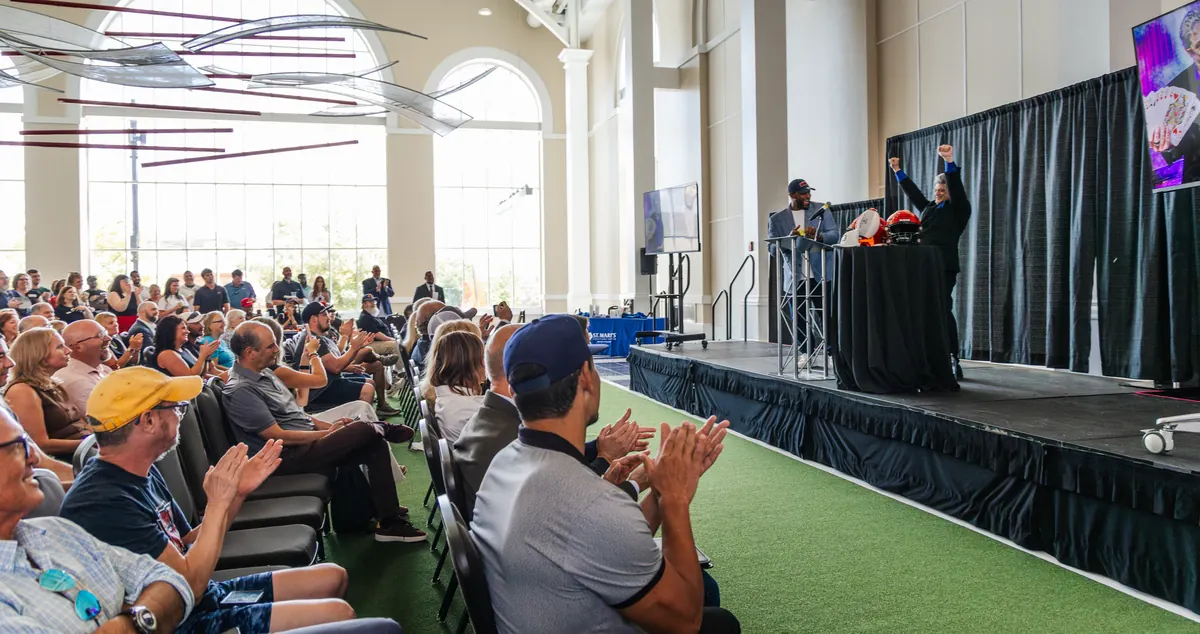
Ask your team what they remember about last year’s company event and watch what happens. They will remember the venue, roughly. They will remember whether the food was good. And then there is usually a pause.
That pause is the whole problem. Months of planning, a real budget, a room full of the people you most want to keep, and what survives is a vague sense that it was fine.
I have been performing since 1994. In that time I have stood in front of a lot of rooms and watched them either light up or quietly wait for dessert. The difference is almost never the budget. It is whether the evening contains a few specific things.
Here are the seven I keep seeing.
The 7 Elements of a Memorable Corporate Event
- Surprise — something the room did not see coming
- Emotional response — a real reaction, not polite attention
- Participation — guests in it, not watching it
- Shared experience — the whole room went through the same thing at the same time
- Relevance — it was about this company, this year, these people
- Contrast — the evening changes texture instead of running flat
- A strong closing moment — the last thing that happens is worth remembering
1. Surprise
Your brain does not bother storing what it expected. A predictable agenda is, by design, forgettable:
welcome, dinner, awards, a few words from leadership, drive home. Every one of those items may be executed
perfectly, and not one of them gives the memory anything to hold onto.
“Incredible show — afterwards everyone asked me ‘where did you find this guy?!’”
Mandy, Manager, major airline
That question is the sound of surprise doing its job. And notice what it is not. It is not a compliment
about the entertainment. It is a compliment about the host.
2. Emotional response
Information decays fast. Feeling does not. Nobody remembers the third slide of the Q3 recap, but everybody
remembers the year the CFO lost a bet on stage.
“I was on the edge of my seat the entire time. Each part of everything he did was one great gasp
after another. He was booked for our company Christmas party and if it were up to me, he’d come back
every party.”
Miracle Dickerson, company holiday party
A room that has reacted together is a different room afterward. People who gasped at the same moment talk to
each other at the bar in a way they were not talking an hour earlier.
3. Participation
This is the element most events get wrong, and it has the widest gap between watching and doing. A guest who
saw something has an opinion about it. A guest who was IN it has a story about it, and a story is what
gets retold on Monday.
“He managed to get every guest involved and talking about how cool he was.”
Meliss Jakubovic
“Rick was great for my corporate event. He was engaging for all my employees and made a fun
environment that really broke the ice for my team.”
Sean, Owner
One caution, because it is exactly why participation makes people nervous. It only works when nobody is
embarrassed. The instant a guest becomes the joke, the rest of the room stops volunteering and starts
protecting itself, and you have lost the element you were trying to create. I promise from the stage at every
show that nobody gets embarrassed. That promise is not politeness. It is what keeps the second half of the
show possible.
4. Shared experience
A memory needs a witness. Something wonderful that happens to one guest at a cocktail table is a nice moment.
The same thing happening in front of the whole company becomes shorthand that people use for years.
“We’ve been talking about some of the things he did for DAYS now.”
Brenna Skalski, 30th birthday party
The test I would apply to any event is simple. On Monday morning, is there one thing that two employees who
sat at different tables can both refer to and both laugh about? If yes, you built a shared experience. If no,
you catered a dinner.
5. Relevance
Guests can tell instantly whether an evening was built for them or ordered out of a catalog. Relevance is what
separates the two, and it lives almost entirely in details: the year the company just had, the merger everyone
is still adjusting to, the inside joke from the sales floor, the team that shipped something hard.
6. Contrast
An evening needs a shape. Most corporate events run on a flat line: people talk, then people sit and listen,
then people talk again. Everything stays roughly the same temperature, and a flat line is very hard to
remember no matter how pleasant each part of it was.
“Kept our group of 16 executives locked in and fully entertained for the entire performance.”
Katie, Chief of Staff, major financial services firm
Sixteen executives is a hard room, not an easy one. Executives are the people most practiced at looking
engaged while thinking about something else. What locks that room in is not volume. It is the change in
texture — the moment the evening stops being something happening near them and starts being something
happening to them.
“He was phenomenal at keeping us all engaged, guessing, and in amazement.”
Rachael, Human Resources, major hotel, Team Member Appreciation Week
7. A strong closing moment
People do not remember an experience evenly. They remember its highest point, and they remember how it ended,
and they average those two things into an opinion of the whole night. Which means the last ten minutes of your
event carry more weight than the first ninety.
“The way Rick kept the energy and surprises going the whole show made us sad it was over.”
Paige Ewing
“Rick truly was the star of the event and helped make it a huge success. Several people even asked
for his contact information because they were so impressed.”
Melanie C., verified GigSalad review, April 2026, professional lunch event
That second one is worth reading twice, because it describes a measurable outcome. Guests asking the host for
a vendor’s contact information is the clearest signal there is that an event cleared the bar. Nobody
chases down contact details for an evening that was fine.
The same event, run two ways
Take one annual appreciation dinner, one hundred and twenty guests, identical budget, and run it twice.
When entertainment works, and when it does not
I want to be honest here, because “hire entertainment” is not the answer on its own. I have seen
entertainment carry an entire evening, and I have seen it completely wasted. The failures follow patterns.
- It runs during dinner service, competing with plates, servers and a hundred conversations already in progress.
- It is scheduled first, while a third of the guests are still parking.
- It is too loud to talk over and too quiet to command the room, so it does neither job.
- The room is wrong for it — a long narrow space where two thirds of the guests cannot see, or a bar at the back that never stops serving.
- Nobody told the performer anything about the company, so the show could have been for anyone.
- It ends, and then four more agenda items happen on top of it.
- It gets a defined block with the room’s attention, not a background slot.
- It sits late enough that everyone has arrived and eaten, and early enough that the room is still sharp.
- Guests are in it rather than watching it.
- The performer asked real questions beforehand and used the answers.
- It is the last real thing that happens.
Where mentalism fits
I am obviously not a neutral party here, so let me be precise rather than promotional.
“Rick engages with audience members, brings them on stage and then reads their minds. He does it in
front of everyone. This could not be scripted and I have no idea how he does it. Great entertainment idea
for a group looking for something unusual.”
Brian Sulka
The practical reasons it fits a corporate room are less romantic. It needs six feet by six feet of clear floor,
sets up in under five minutes, and requires no stage build, no risers, no load-in crew and no technical rider.
It works for eight guests and it works for two hundred. There are no stooges and no secret helpers.
Nobody gets embarrassed, and it stays clean throughout — which
matters when the room contains your CEO and your newest hire at the same table.
The short version
If you take only one thing from this, take the checklist. Before your next event is locked, walk the agenda and
ask which of the seven each block actually delivers.
Whatever you build it around, the goal is the same: a room full of people who go home with a story instead
of an impression. If you would like to talk through where entertainment should sit in your particular evening
— and I will tell you honestly if I do not think it belongs there —
get in touch and tell me about your event.